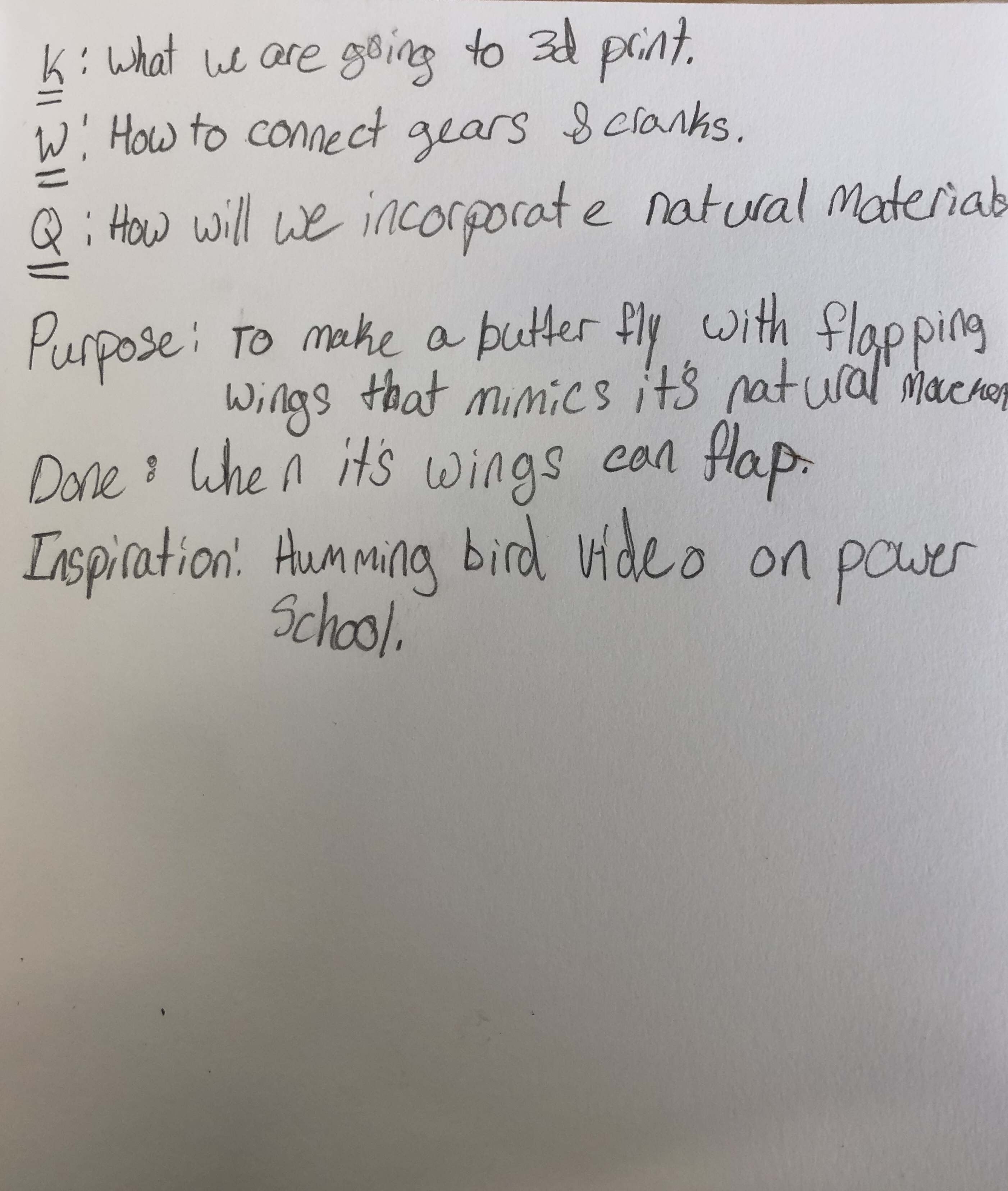
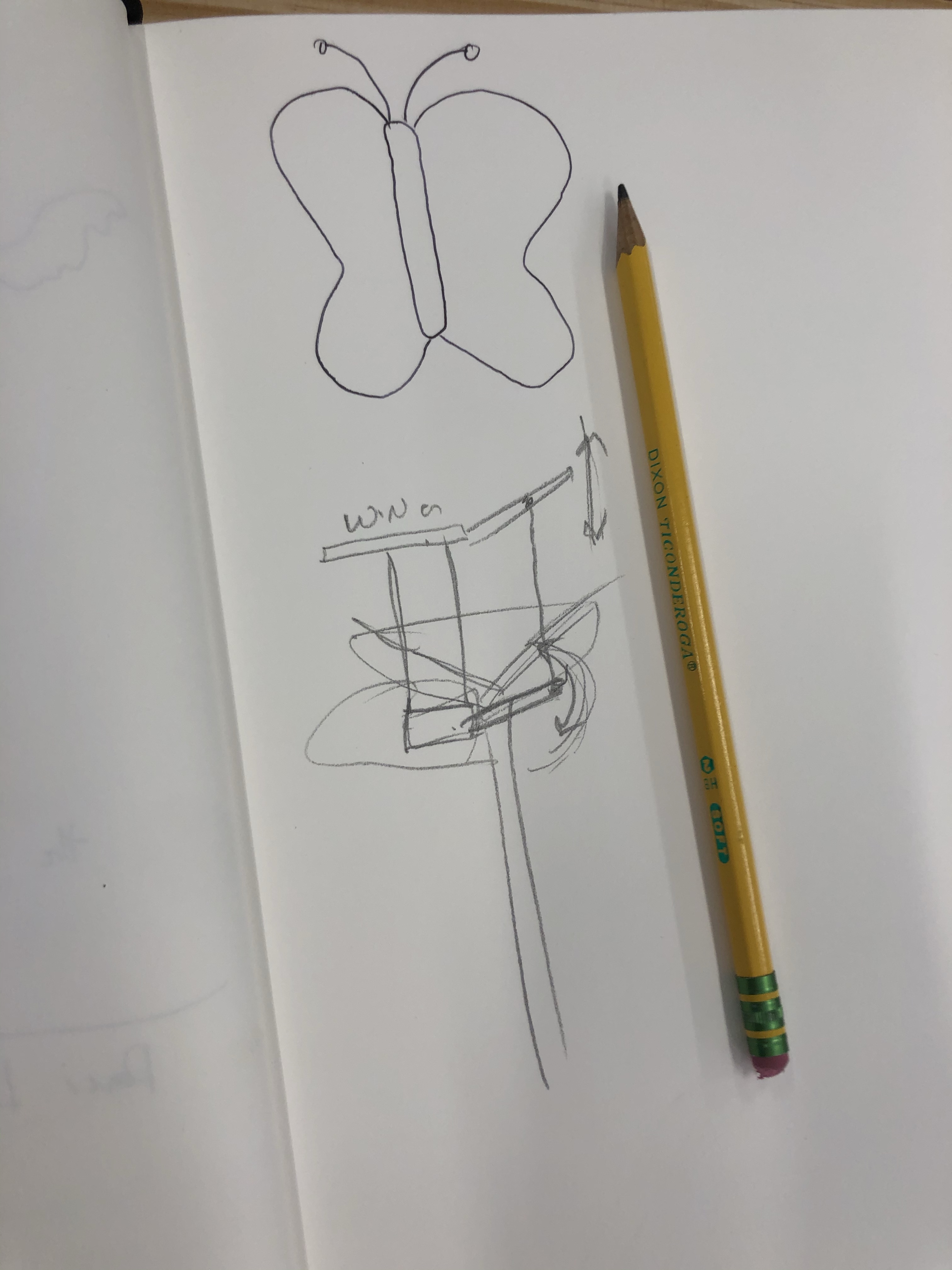
The start of this project went like this: We were assigned a project to build an organic movement machine. Alex and I were partners and brainstormed a lot of ideas such as a hand, or a tree. We agreed on doing a butterfly, because we saw an example of a hummingbird in the presentation Mush showed us. Also, Ms. Kato-Starr showed us how she made a very simple butterfly with her daughter. We got to work on our project proposal. The original idea was to make a crank that made the wings flap. We decided to 3d print the butterfly. We also identified our KWQ, purpose, define your done, and inspiration.
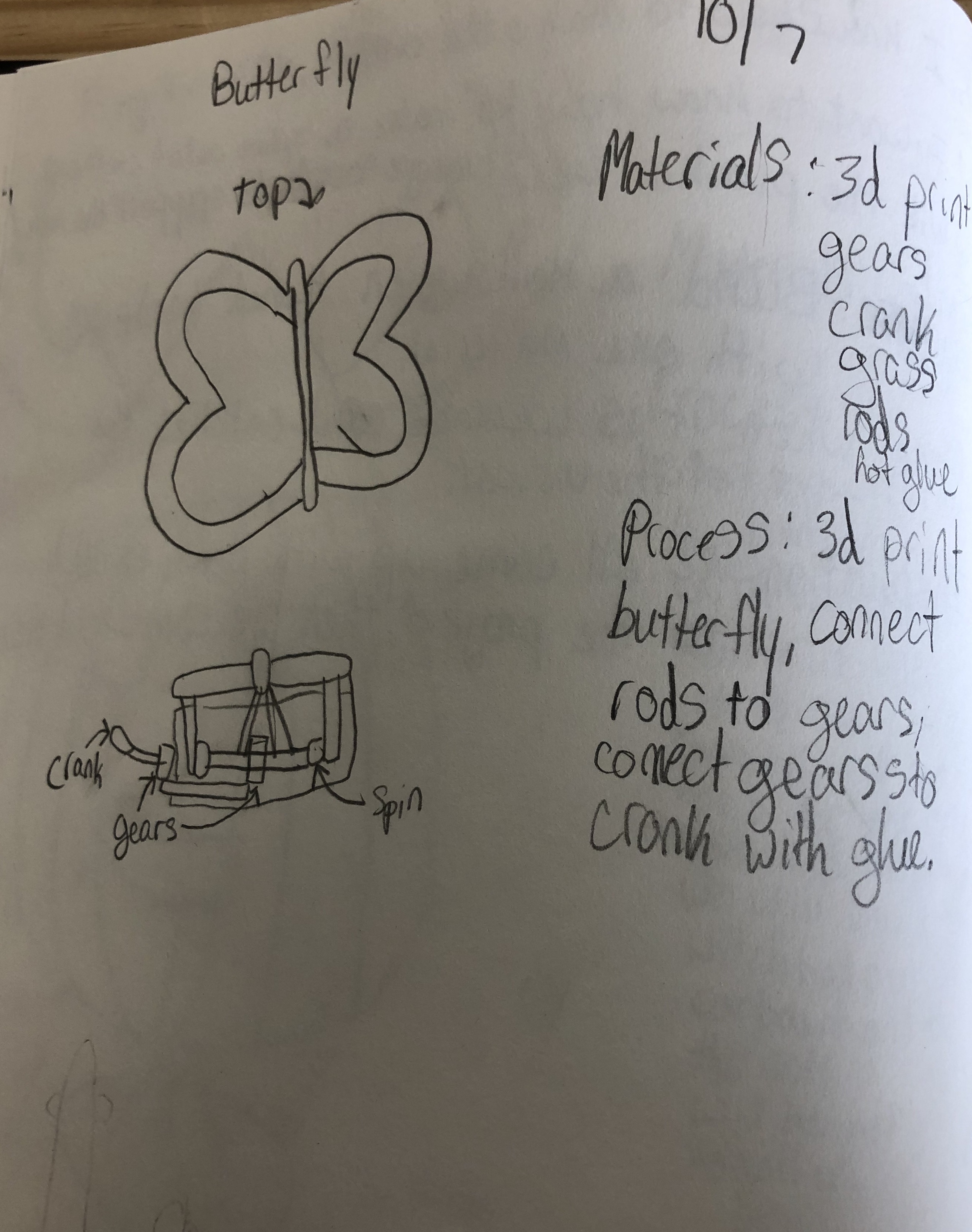
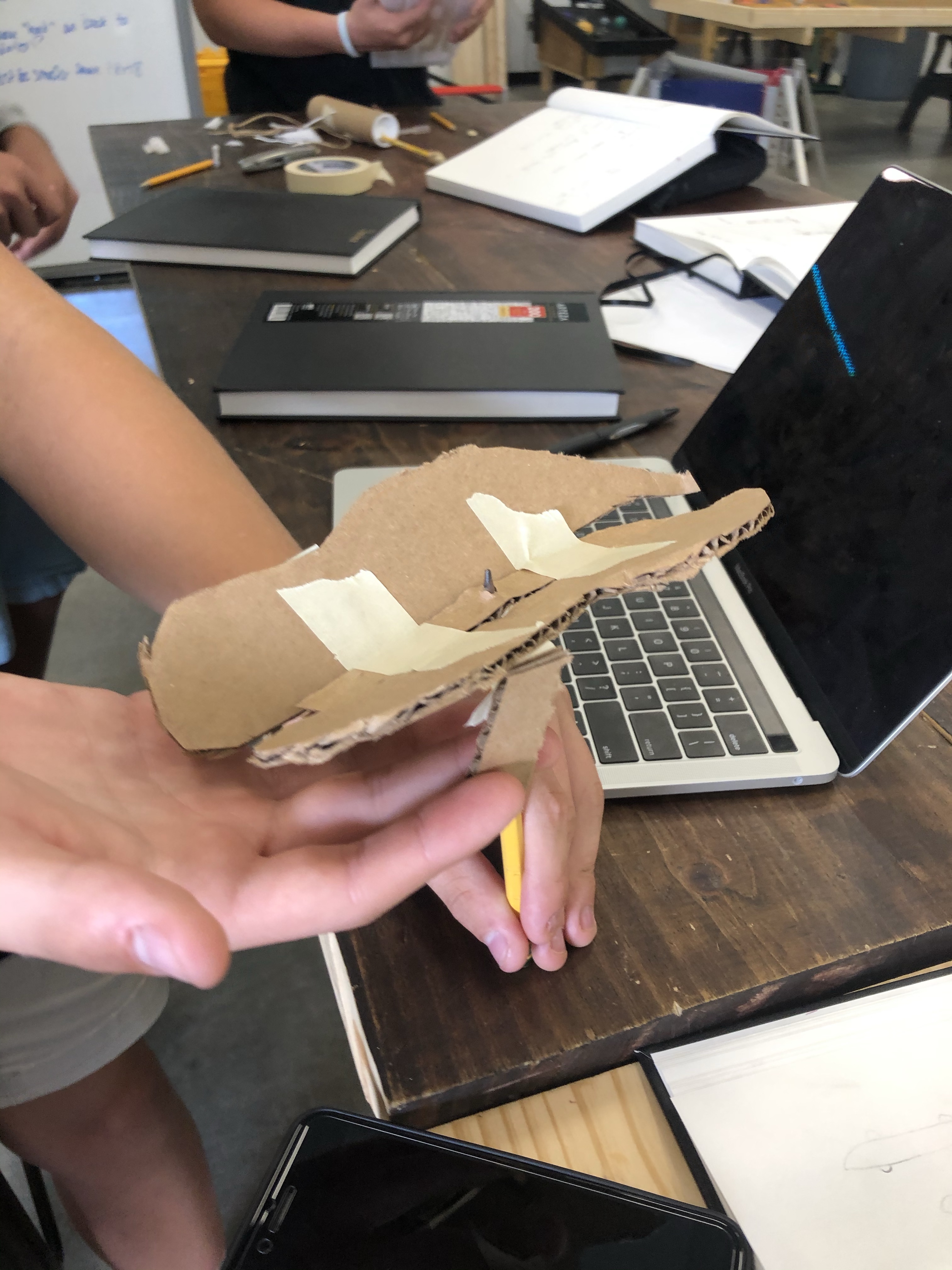
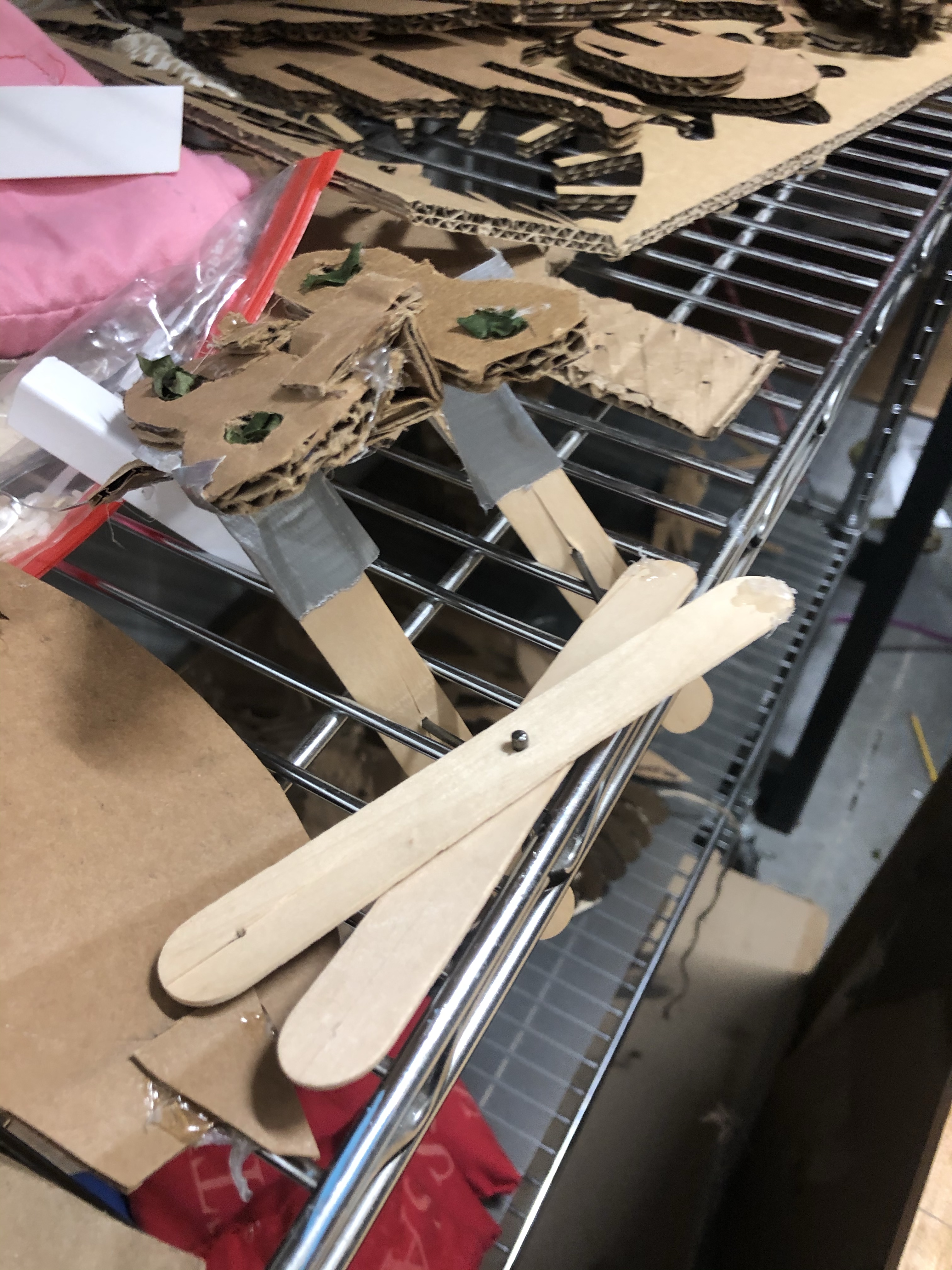
After that we started prototyping. We used cardboard because it was quick and easy, and it’s perfect for prototyping. It was very simple, we had two winged shaped cardboard pieces connected to a middle piece with tape. It looked like this:
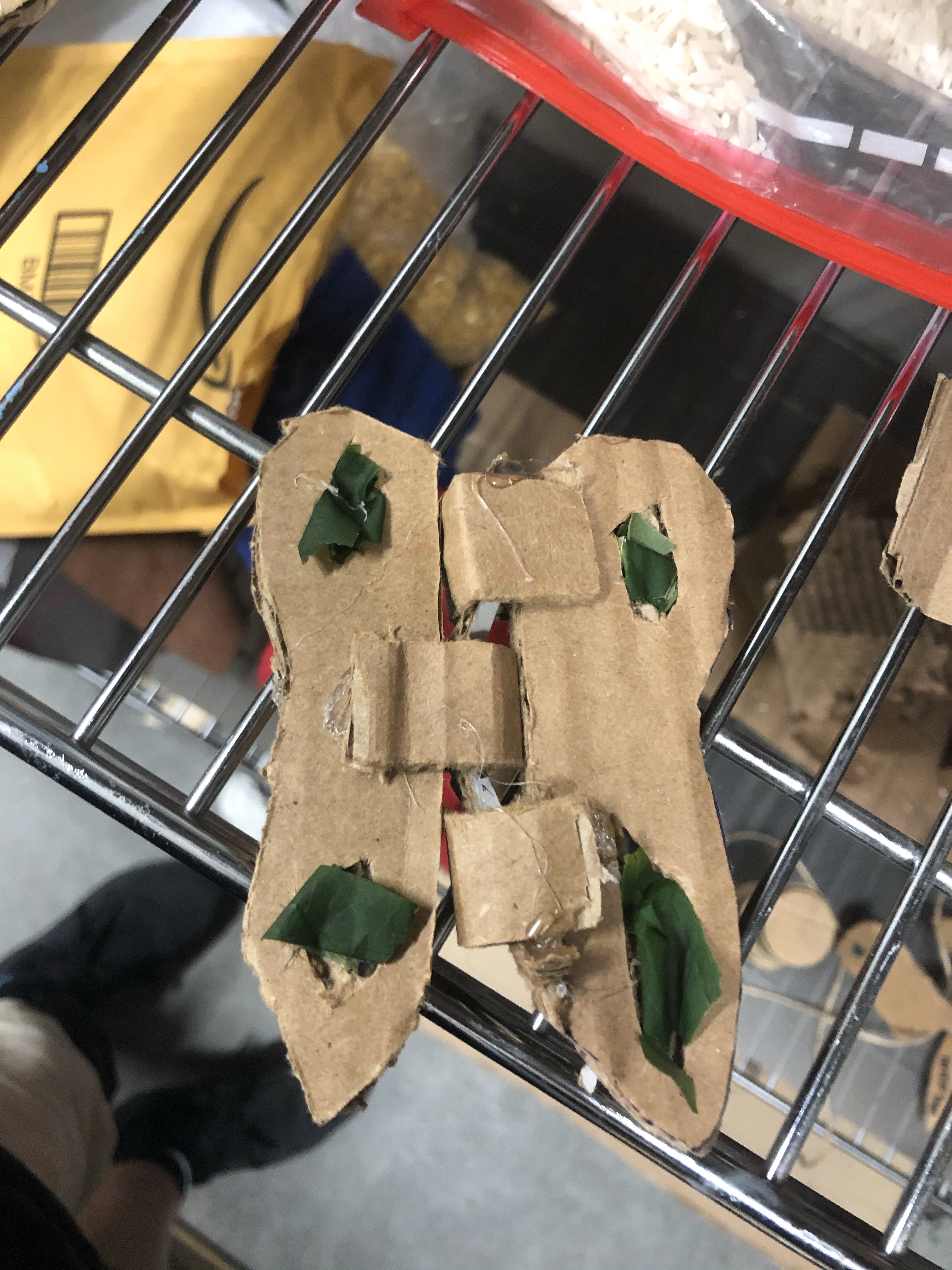
Then we made the more advanced prototype. It was connected via a cardboard hinge and had no tape. Also we added leaves to the wings to give it more of a pattern. We then needed to make the wings flap. This process was very difficult. We tried a bunch of weird things, like nailing popsicle sticks together and make a scissor motion. It shows how making a prototype is very important. Without that our final version would have not turn out as well as it did.
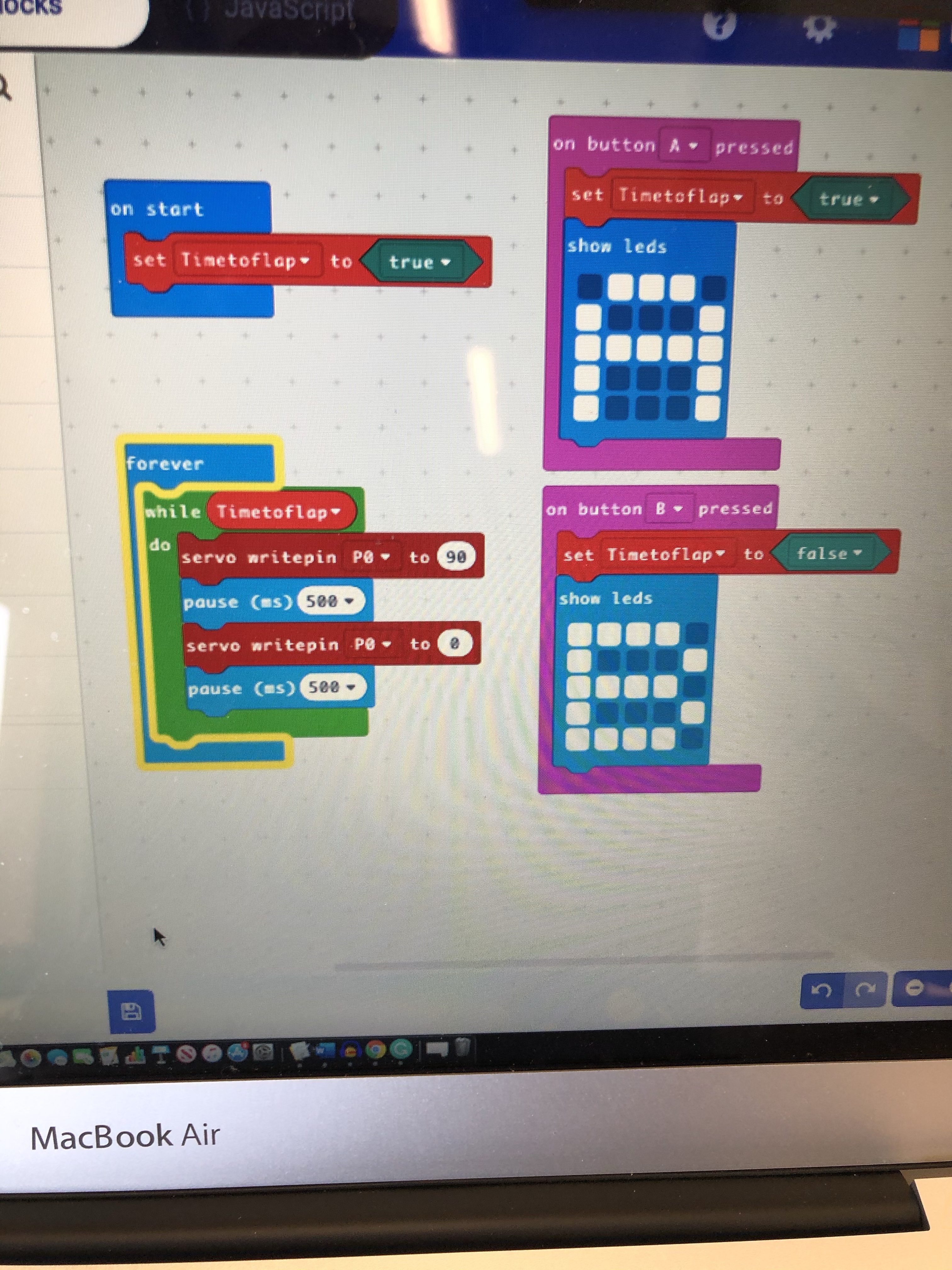
After that, as a class we did some coding with micro bits and servos. I really enjoyed it and was excited to put it on our project. I thought it was cool to actually make it a real machine rather than a hand powered art project. This was where we showed the explore standard, we explored different ways to do things and it benefitted our project. The next class I worked on the code. It moved the servo back and forth. I showed Mush and he gave me the idea to mount the servo to on wing and have the other move. This is where I showed the standard test, I got feed back and used it. It saved me time and confusion. The next class I made the code slightly more advanced by adding start and stop buttons to it. Then we tried it out on a butter fly that got messed up when printing. I don’t know what happened because Alex was working on it I think we could have communicated better throughout the project, and I will remember that for next time. It worked out though because we used that butterfly to see that it would work. We then decided to cover the servo with a flower, and have the wires run through a straw that would be the stem.
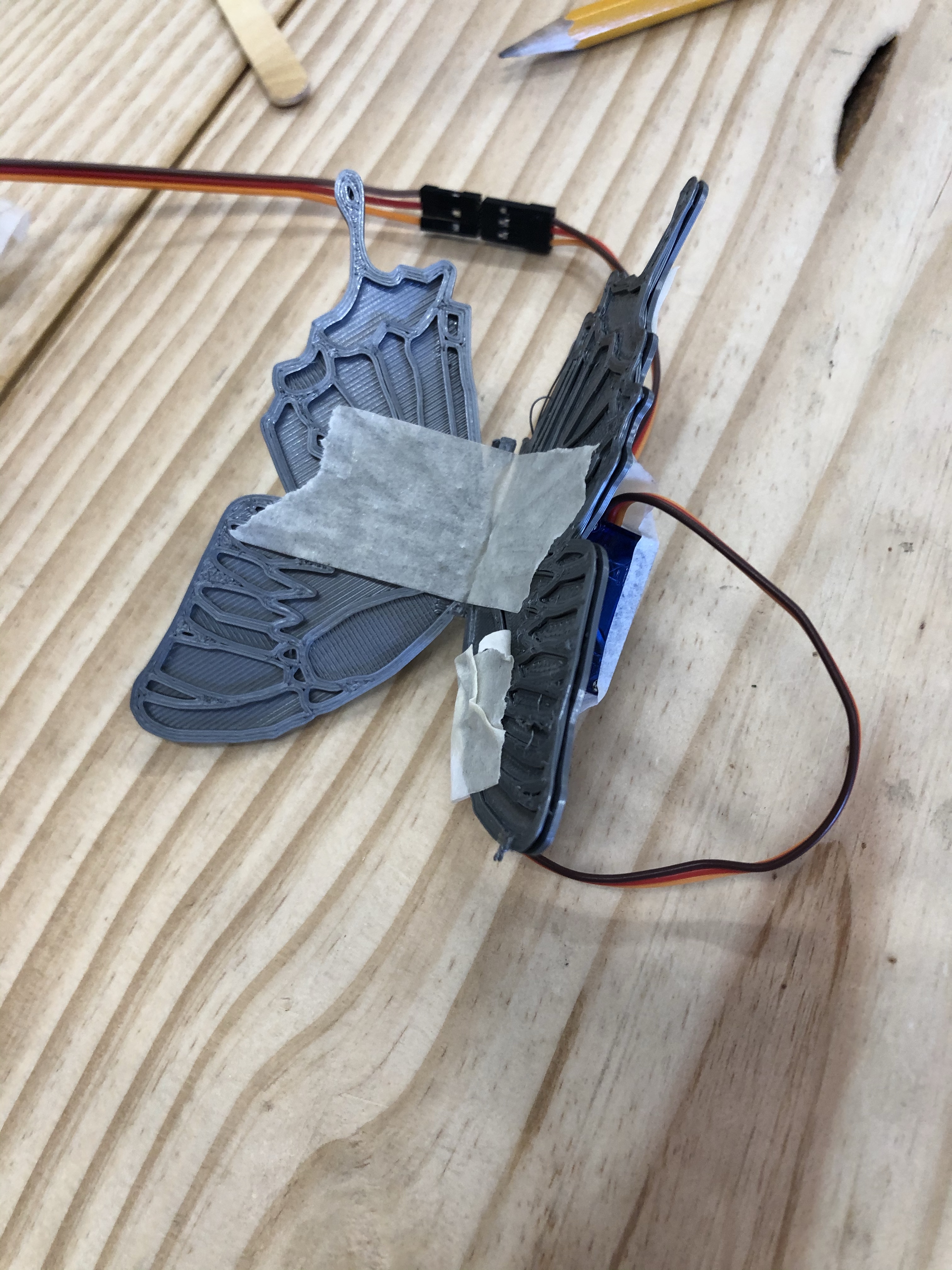
When I was absent for a class Alex printed the butterfly. When I got back we remembered that we had to add a natural element to it. We thought back about our prototype and remembered the leaves that we put in the wings. So we cut leaves and put them in the wings. Then we used hot glue to keep them down. We didn’t realized that the hot glue wouldn’t be clear when it dried. So, we had the “genius” idea to sand it down. I don’t know if we were tired and not thinking straight, but it was a huge fail and we spent the rest of class taking the glue out.
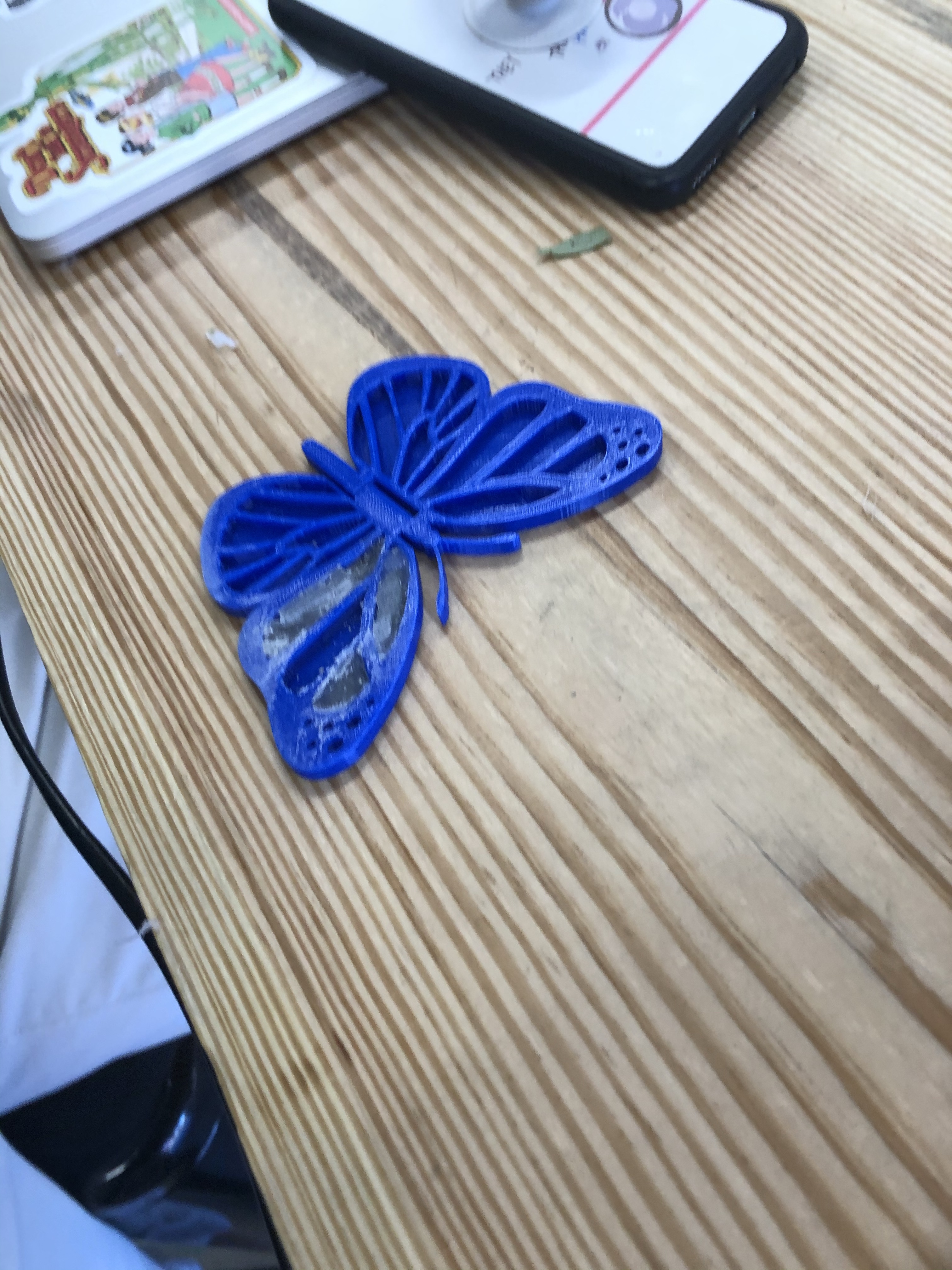
In the next class I used the leaves and glue them in with a glue stick, this worked much better and looked good. Then I stretched out a paper clip and attached it to a servo. I tried to hot glue it on, but when doing that I found thatI could make a hinge with that and taped it on. This allowed the servo to move the wing up and down.
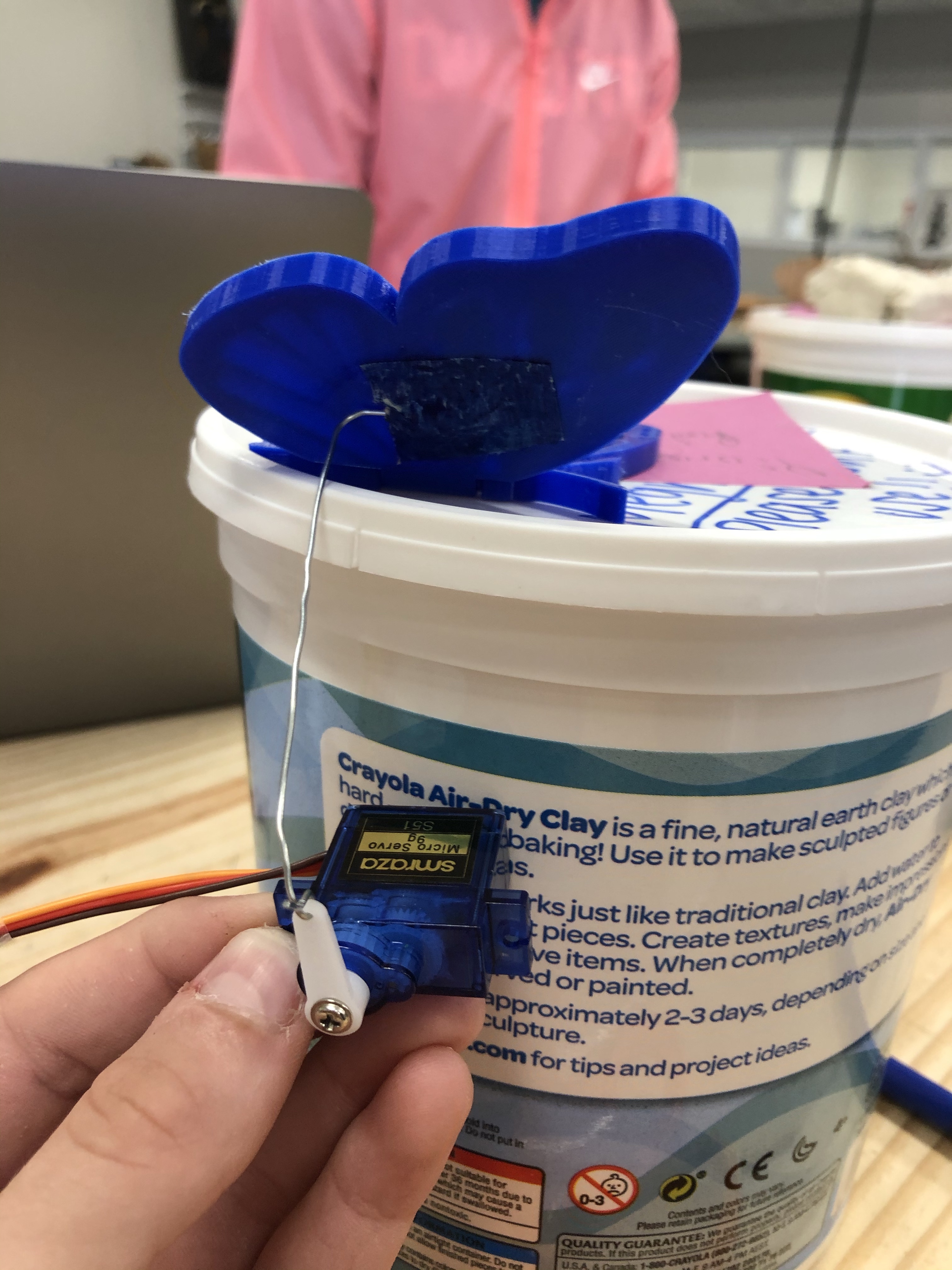
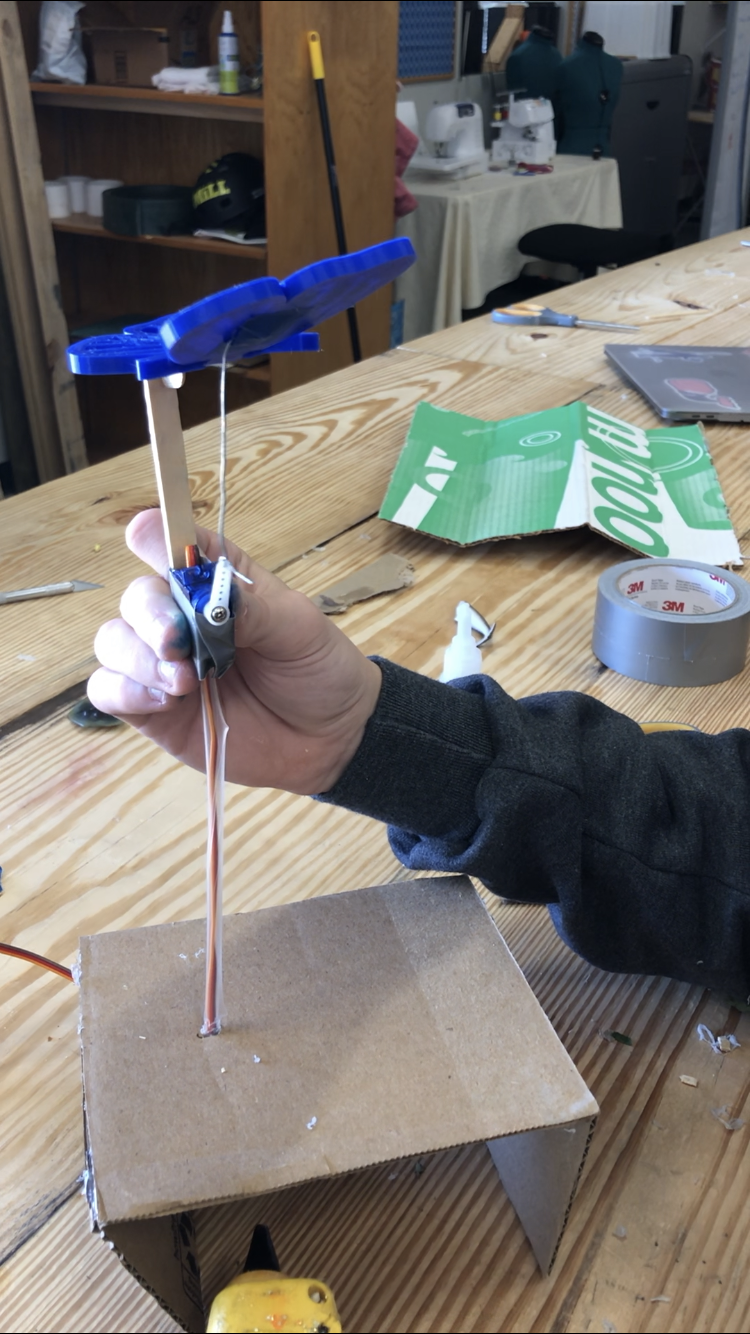
The next class was my most productive class, I supported the wing with a popsicle stick, I ran the wire through a straw and connected it all together. The only problem was that the straw wasn’t very stable.
The next class I added support to the straw, covered the platform in grass and supported the base better. The only thing to add was the flower, which Alex had been working on for awhile. When he finished it was going to be difficult to add, we had to take apart a lot of things to fit it on there. We got it on there, colored the stem green and the platform. The whole thing was stable and perfect. Then we came to class the next day and found out it had been broken. We had to fix it super quick with dowels and rubber bands. I wish it had gone better, but at least it worked.
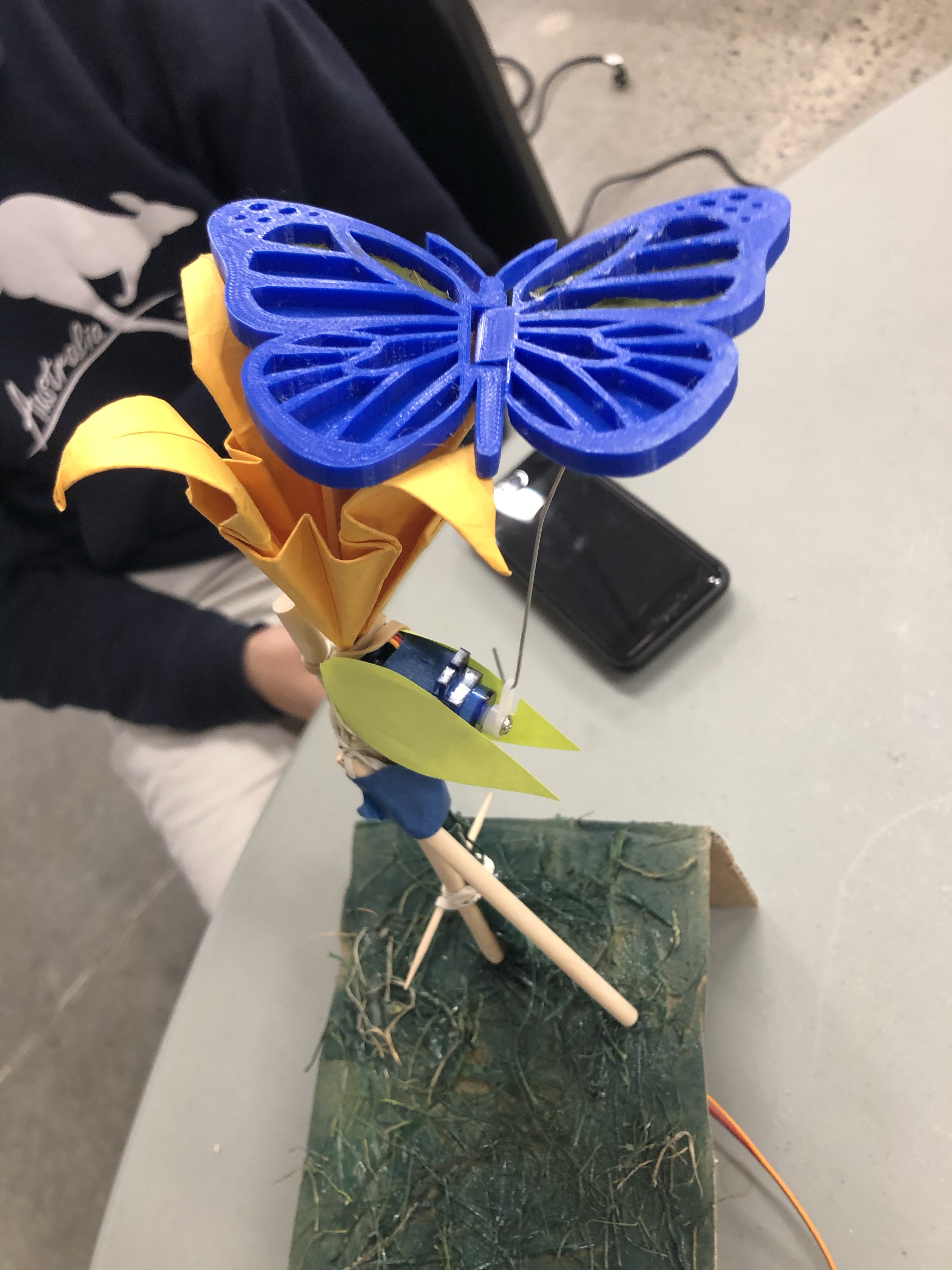
The main standard that we met was craft, because it looked good, and worked well. The standard we didn’t do great was engage, mostly because Alex and I didn’t communicated very well. We both worked well when we were doing our own thing but when we worked together there was some confusion.
 David's CDE Blog